

Myopia management is an area of eye care that uses various tools and treatments to prevent or slow your child’s myopia progression. Depending upon your child’s specific needs, our doctors will be able to prescribe management options that can help your child maintain better vision for longer.
Elevated Eye Health
Pediatric Myopia
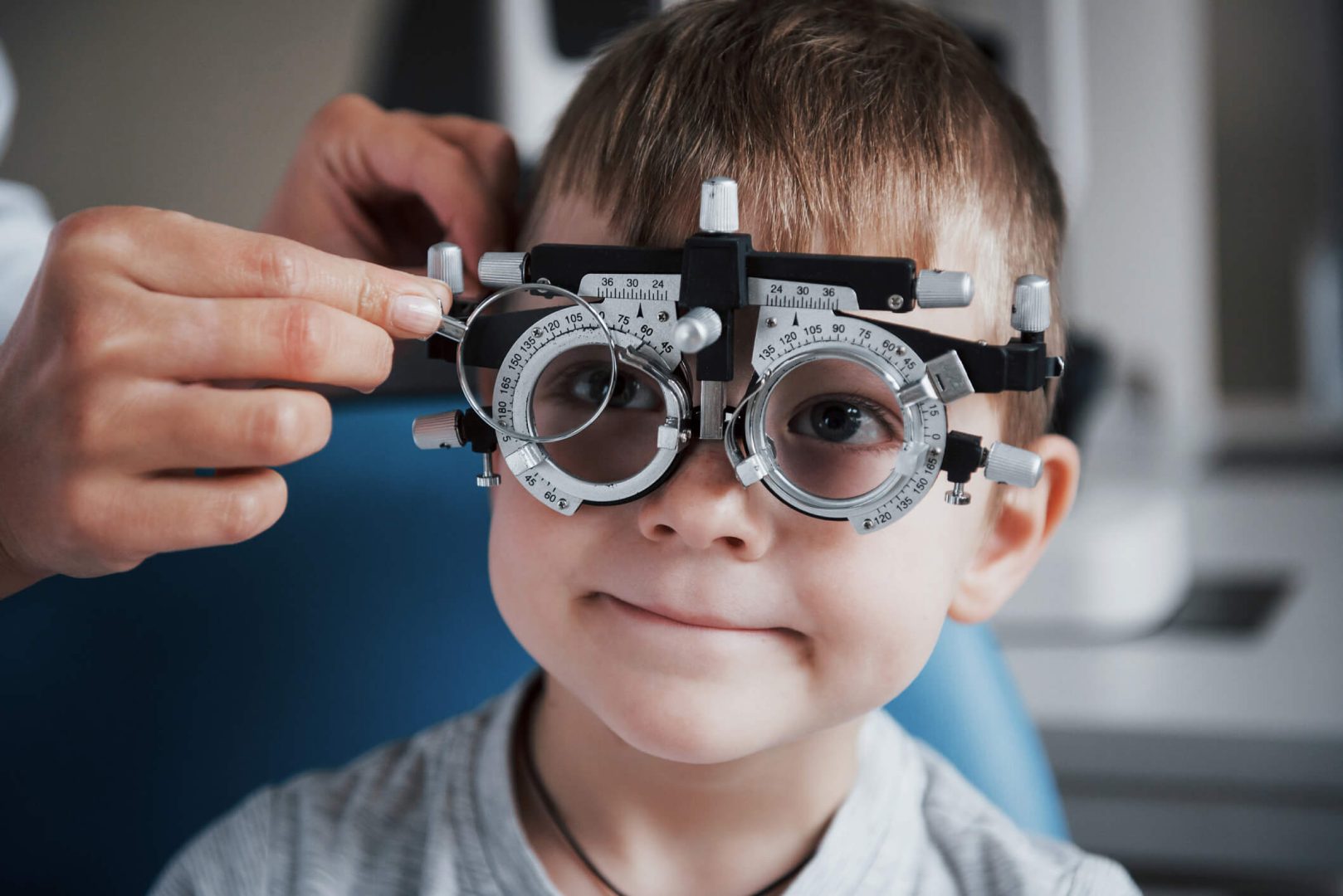
Why Does My Child’s Nearsightedness Need to Be Managed?
Myopia significantly increases the risk of developing sight-threatening eye diseases later in life, such as cataracts, glaucoma, retinal detachment and macular degeneration. The higher your child’s myopia, the greater the risk. Although eyeglasses and standard contact lenses can correct a person’s vision, they do not treat the underlying cause of myopia or slow its progression. This is where myopia management comes in.
Treatment
If you’re concerned about your child’s long-term eye health and vision, contact your eye doctor today. They can help. We offer Essilor® Stellest® lenses – the first and only FDA market authorized spectacle lens to slow the progression of nearsightedness in children*¹.
Why choose Essilor® Stellest® lenses for your child? Essilor® Stellest® lenses slowed myopia progression by 71% on average over 2 years*¹.
For children aged 8-12, we can offer MiSight® 1 day soft contact lenses. They are specifically designed for myopia control and are FDA approved^ to slow the progression of myopia in children at initiation of treatment.4† As a daily disposable soft contact lens, its dual focus optical design allows your age- appropriate child to see clearly and signals the eye to slow down in its growth.4† This reduces the risk of sight-threatening eye health conditions down the road,8 while helping your age-appropriate child today.
*Compared to single vision lenses. Results from a prospective, randomized, double-masked, multicenter U.S. clinical trial in myopic children aged 6–12 years at initiation of treatment.
¹Essilor International, data on file (2025).
† Compared to a single vision 1 day lens over a 3-year period.
4 Chamberlain P, et al. A 3-year Randomized Clinical Trial of MiSight® Lenses for Myopia Control. Optom Vis Sci. 2019; 96(8)556-567.
^ INDICATIONS AND BRIEF SAFETY INFORMATION for MiSight® 1 day soft contact lens:
INDICATIONS:
MiSight® 1 Day (omafilcon A) Soft (Hydrophilic) Contact Lenses for Daily Wear is a prescription device indicated for the correction of nearsightedness and for slowing the progression of nearsightedness in children with non-diseased eyes, who at the initiation of treatment are 8-12 years of age and have a refraction of -0.75 to -4.00 diopters (spherical equivalent) with ≤ 0.75 diopters of astigmatism
BRIEF SAFETY INFORMATION:
Rx only; results may vary.
ATTENTION: Reference MiSight.com/safety for a complete listing of Indications and Important Safety Information.
INDICATIONS: MiSight® 1 day (omafilcon A) soft (hydrophilic) contact lenses for daily wear are indicated for the correction of myopic ametropia and for slowing the progression of myopia in children with non-diseased eyes, who at the initiation of treatment are 8-12 years of age and have a refraction of -0.75 to -4.00 diopters (spherical equivalent) with ≤ 0.75 diopters of astigmatism. The lens is to be discarded after each removal.
WARNINGS: Problems with contact lenses could result in serious injury to the eye. Do not expose contact lenses to water while wearing them. Under certain circumstances MiSight® lenses optical design can cause reduced image contrast/ghosting/halo/glare in some patients that may cause difficulty with certain visually-demanding tasks.
PRECAUTIONS: Daily wear single use only. Patient should always dispose when lenses are removed. No overnight wear. Patients should exercise extra care if performing potentially hazardous activities.
ADVERSE EVENTS: Including but not limited to infection/inflammation/ulceration/abrasion of the cornea, other parts of the eye or eyelids. Some of these adverse reactions can cause permanent or temporary loss of vision. If you notice any of the stated in your child, immediately have your child remove the lenses and contact your eye care professional.